

🌿 Hay Fever Relief Guide
What You Can Do to Prevent & Manage Symptoms Naturally
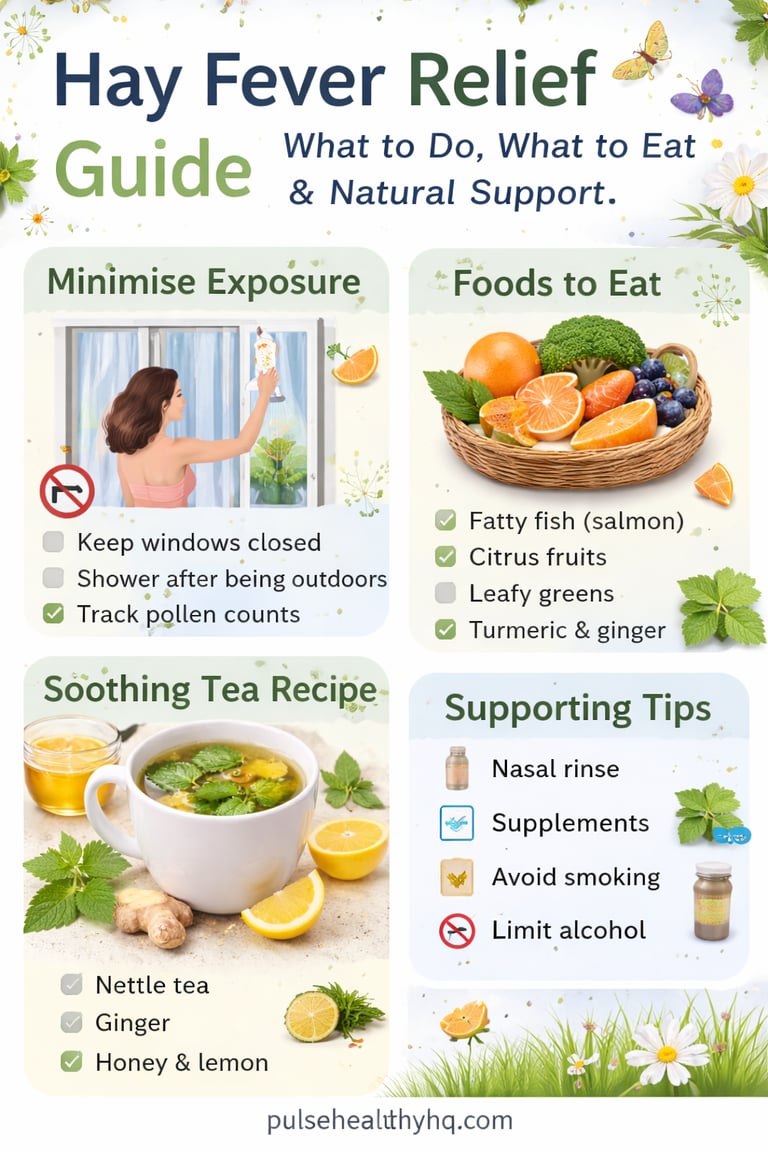
Hay fever (also called seasonal allergic rhinitis) is a common allergic reaction to pollen. Symptoms may include:
Sneezing
Runny or blocked nose
Itchy eyes
Watery eyes
Sinus pressure
Fatigue
While hay fever can’t be “cured” permanently, symptoms can often be managed and reduced with the right approach.
🌼 What Causes Hay Fever?
Hay fever happens when your immune system reacts to harmless substances like:
Tree pollen
Grass pollen
Weed pollen
Your body releases histamine, which triggers inflammation and common allergy symptoms.
🛡️ How to Prevent Hay Fever Symptoms
✅ 1. Reduce Pollen Exposure
Keep windows closed during high pollen days
Shower and change clothes after being outdoors
Avoid drying clothes outside
Use air purifiers with HEPA filters
✅ 2. Track Pollen Counts
Check daily pollen forecasts and limit outdoor activity when levels are high.
🥗 What to Eat During Hay Fever Season
Some foods may help support your body’s natural response to inflammation.
🌿 Anti-Inflammatory Foods
Fatty fish (salmon, sardines)
Olive oil
Leafy greens
Berries
🍊 Vitamin C–Rich Foods
Oranges
Kiwi
Bell peppers
Strawberries
Vitamin C may support normal histamine balance.
🧄 Quercetin-Rich Foods
Onions
Apples
Broccoli
Green tea
Quercetin is a plant compound studied for its role in histamine response.
💧 Other Natural Support Tips
🌊 Nasal Rinse
A saline nasal rinse can help remove pollen from nasal passages.
💊 Consider Supplements (Talk to a Professional)
Some people explore:
Quercetin
Vitamin C
Omega-3
Local raw honey
Always consult a healthcare provider before starting supplements.
🚫 What to Avoid During Hay Fever
Outdoor exercise during peak pollen times
Alcohol (can worsen congestion)
Smoking
High-processed foods
📌 Quick Action Plan
If hay fever hits:
Reduce pollen exposure
Stay hydrated
Use saline rinse
Eat anti-inflammatory foods
Try soothing herbal tea
Rest