☀️ Vitamin D Foods Ranked
Highest Natural Sources With IU & mcg
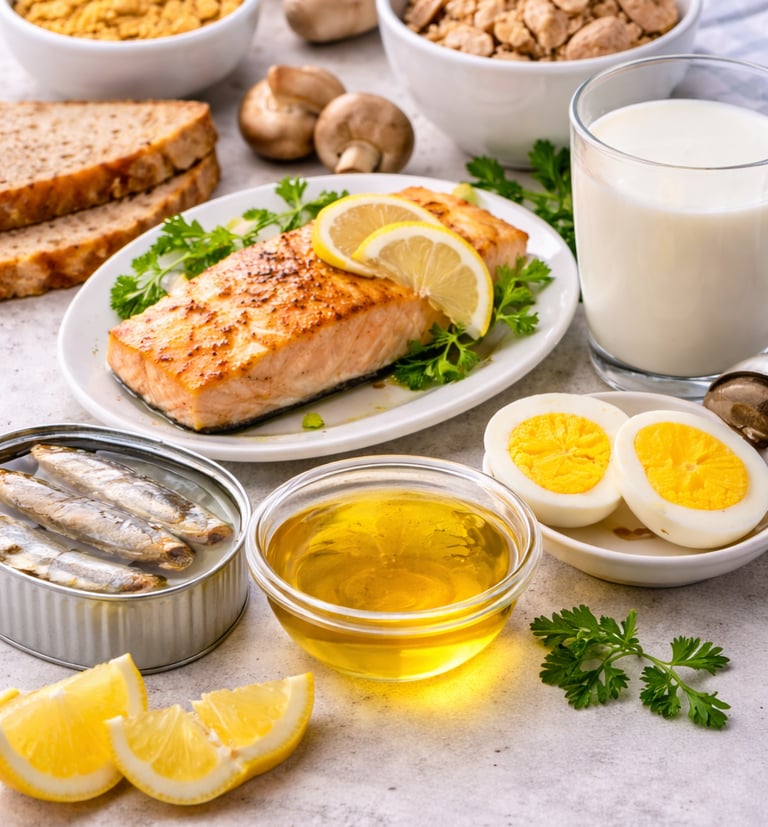
Vitamin D is essential for bone health, immune function, muscle strength, and mood regulation. Unlike most vitamins, very few foods naturally contain high amounts of vitamin D — which is why deficiency is common.
Below is a ranked list of vitamin D foods, showing both IU (International Units) and mcg (micrograms) per standard serving.
Conversion note:
1 mcg of vitamin D = 40 IU
🏆 Highest Vitamin D Foods (Ranked)
🥇 1. Cod Liver Oil (1 tablespoon)
Vitamin D: 1,360 IU (34 mcg)
Extremely high in vitamin D. Also rich in omega-3s.
⚠️ Avoid excess use due to high vitamin A.
🥈 2. Cooked Salmon (100 g / 3.5 oz)
Vitamin D: 360–600 IU (9–15 mcg)
One of the best natural food sources of vitamin D.
🥉 3. Canned Sardines (100 g)
Vitamin D: ~270 IU (6.8 mcg)
Affordable, shelf-stable, and nutrient-dense.
4. Canned Tuna (100 g)
Vitamin D: ~230 IU (5.8 mcg)
Lower than salmon, but still a solid option.
5. Mackerel (100 g)
Vitamin D: ~360 IU (9 mcg)
Excellent vitamin D and omega-3 combo.
6. Fortified Milk (1 cup / 240 ml)
Vitamin D: ~120 IU (3 mcg)
Common source in many countries (check labels).
7. Fortified Plant Milks (1 cup)
Vitamin D: 100–120 IU (2.5–3 mcg)
Includes soy, almond, and oat milk (varies by brand).
8. Egg Yolk (1 large egg)
Vitamin D: ~40 IU (1 mcg)
Most vitamin D is found in the yolk, not the white.
9. Fortified Breakfast Cereals (1 serving)
Vitamin D: 40–100 IU (1–2.5 mcg)
Amounts vary widely by brand.
10. Mushrooms (UV-exposed, 100 g)
Vitamin D: 150–450 IU (3.8–11 mcg)
Best plant-based natural source when UV-exposed.
⚠️ Important Vitamin D Notes
Sunlight is still the most efficient source
Food alone often isn’t enough
Supplements may be needed in winter or low-sun regions
Fat helps vitamin D absorption
Which food has the most vitamin D?
Cod liver oil has the highest vitamin D content per serving.